StorageHub.
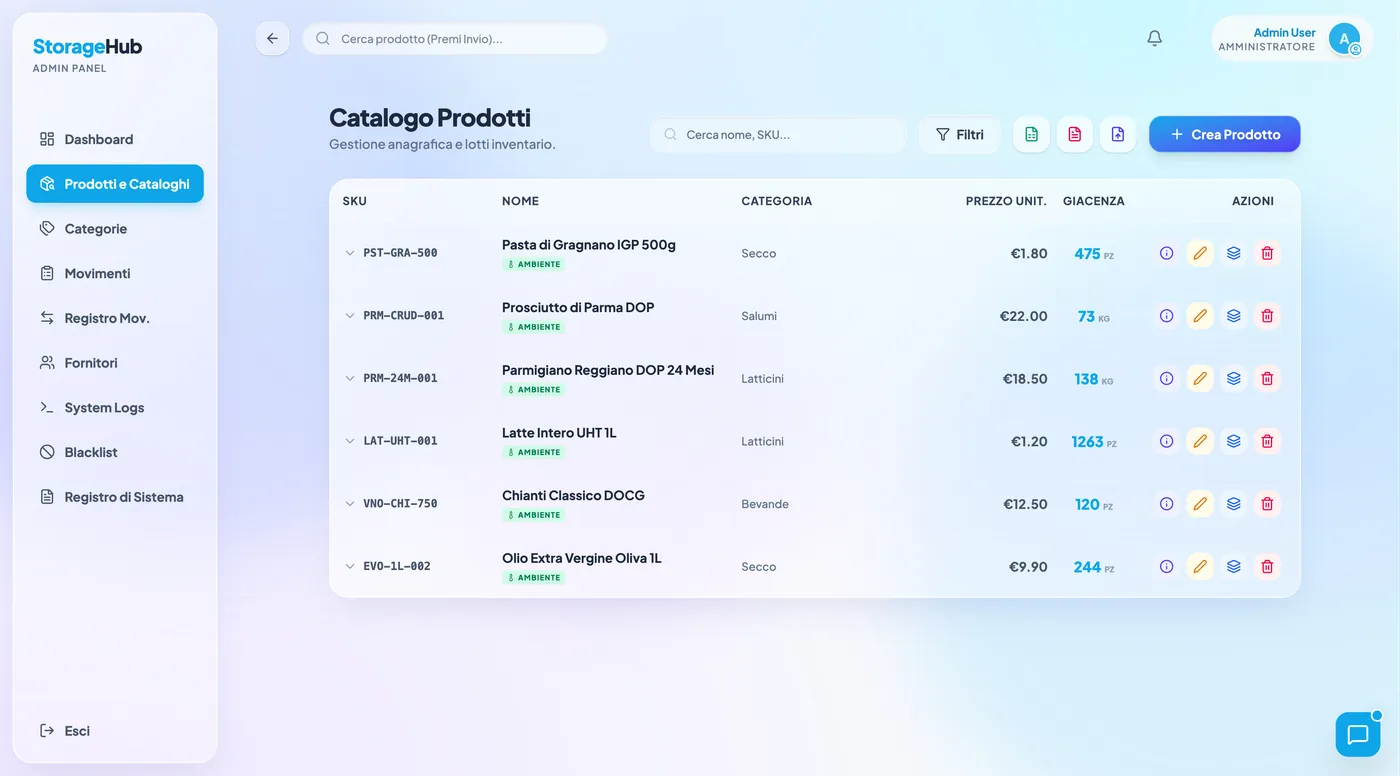
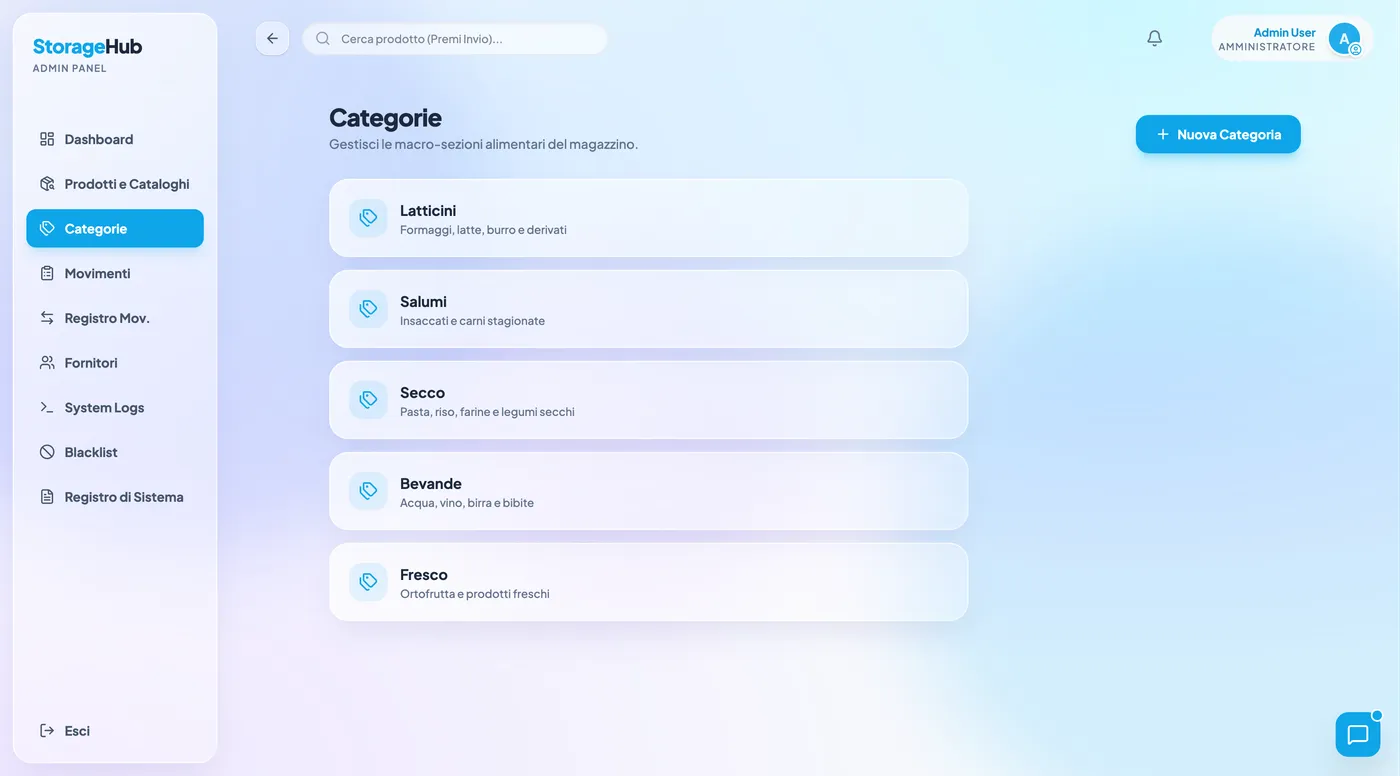
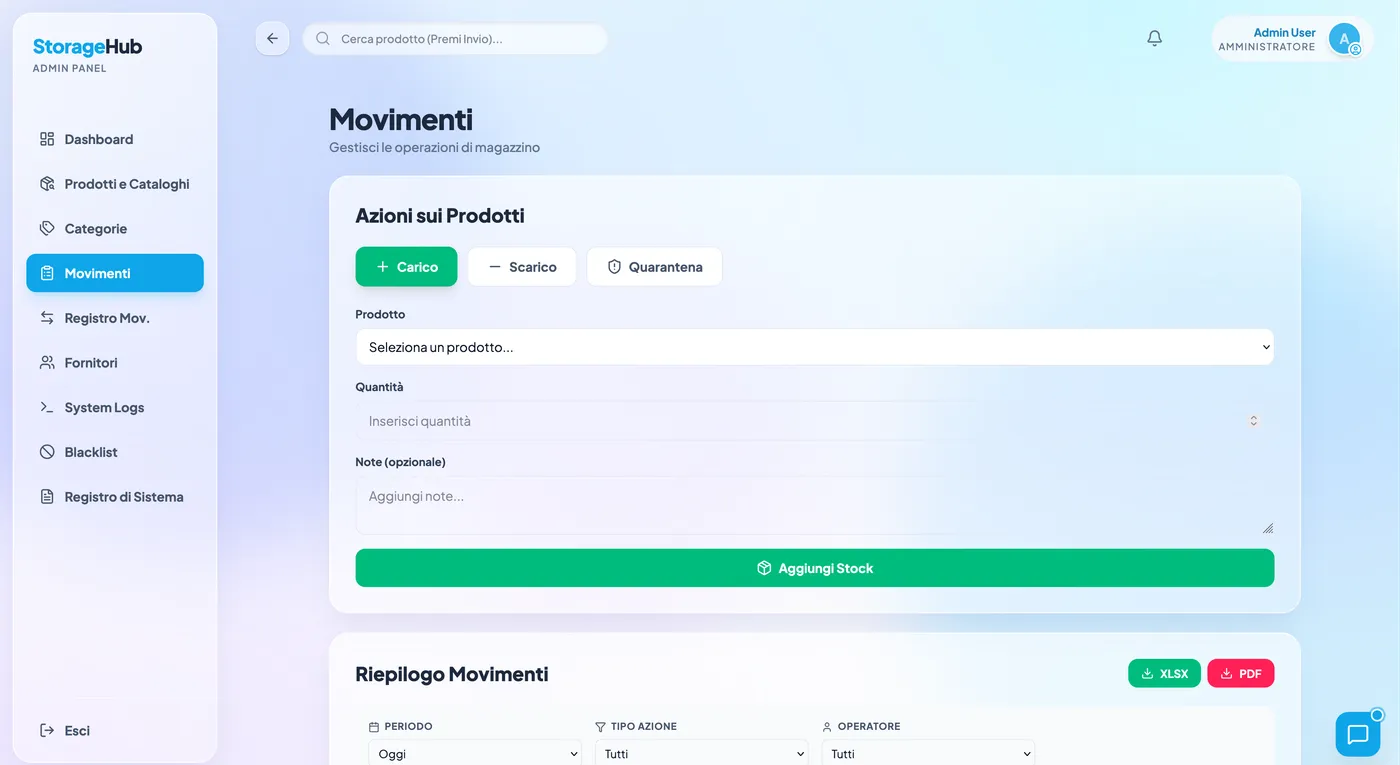
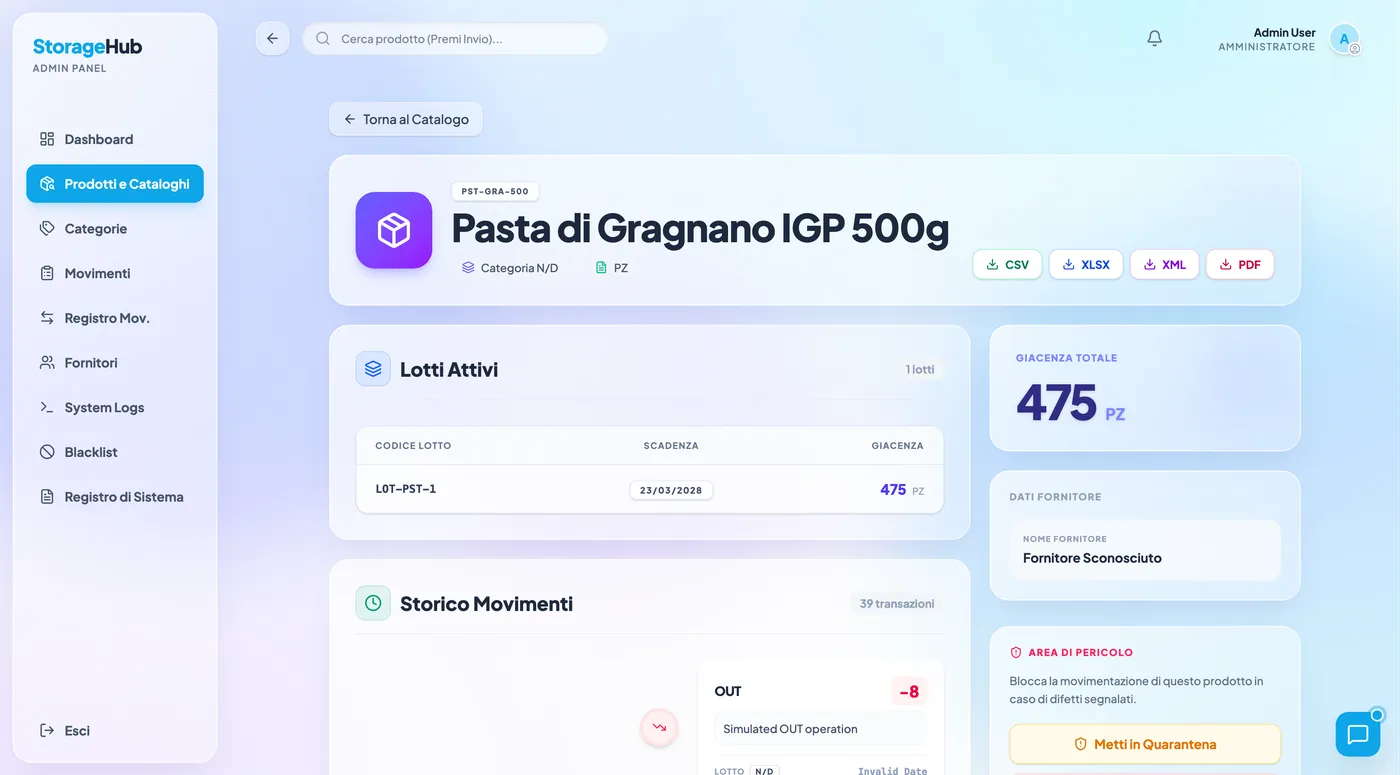
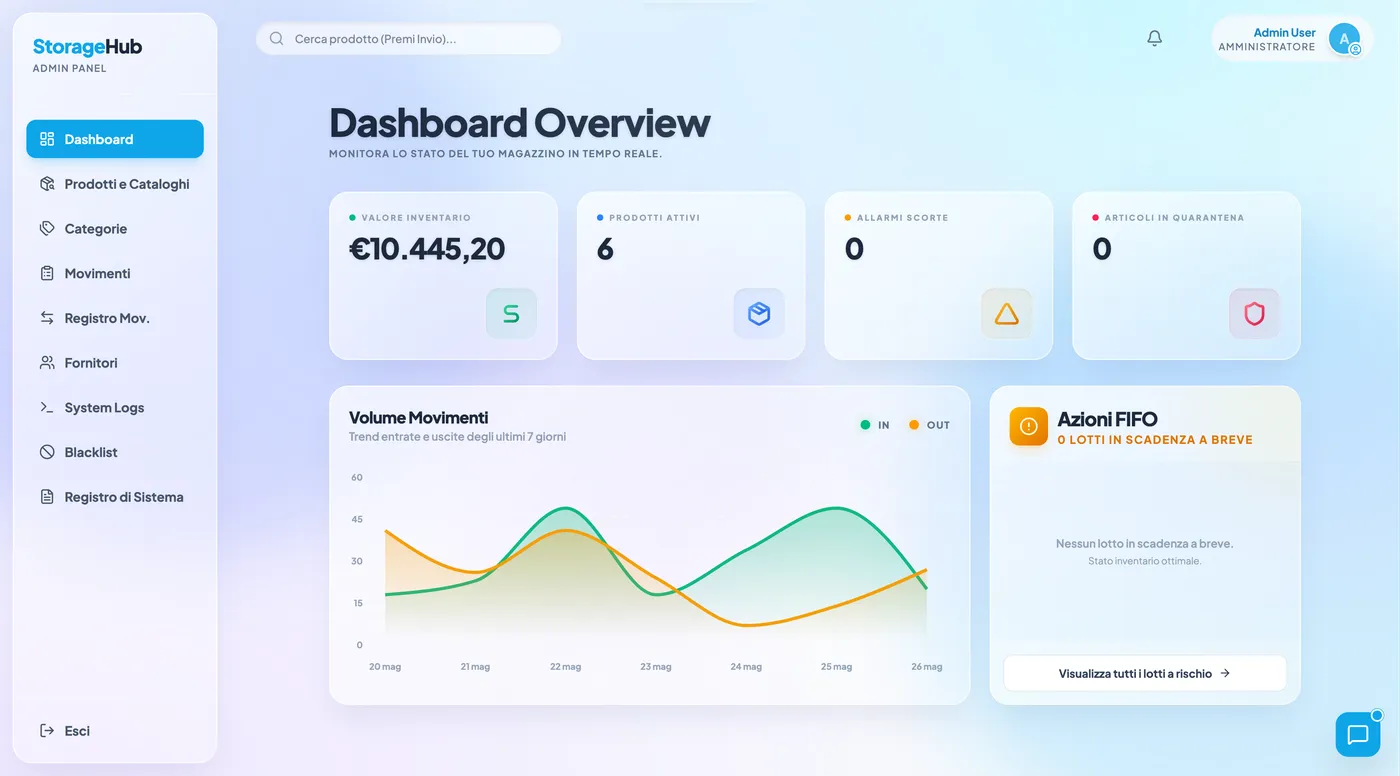
Built within the AWS re/Start Dev, Cloud & Product Academy 2025/2026, StorageHub is a complete inventory and warehouse management system that transforms the chaos of spreadsheets into a single source of truth, assisted by artificial intelligence. AWS cloud architecture with ECS Fargate, Multi-AZ RDS and WAF — engineered for enterprise scale from the very first line of code.
- AI-assisted inventory management system, built by a 5-person team (AWS re/Start Academy)
- Two role-based dashboards — Admin and Warehouse — with RBAC and JWT
- Production-grade AWS infrastructure: ECS Fargate, RDS Multi-AZ, ~€400/month
When spreadsheets cost more than they seem.
Traditional inventory management is one of the most silent sources of loss in companies: spreadsheets misaligned across departments, sudden stockouts that halt sales, and zero real-time communication between decision-makers and warehouse staff. The cost is not only financial — it is cognitive. Every 'where are the stock levels for that product?' is an interruption, an email, a wait. StorageHub was born from a precise question: what if the warehouse could speak directly to management, in real time, without intermediaries?
"When managing my company's logistics, I want
Two roles, one platform.
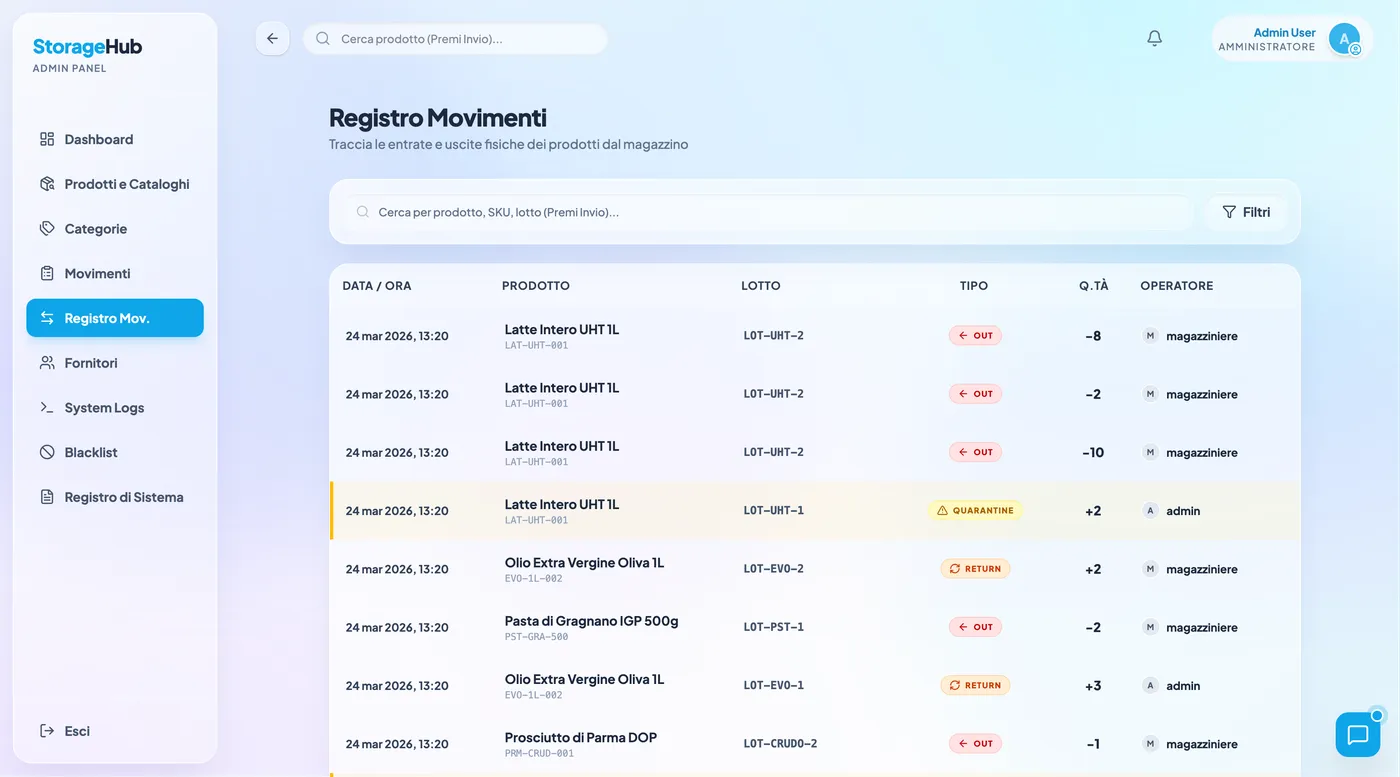
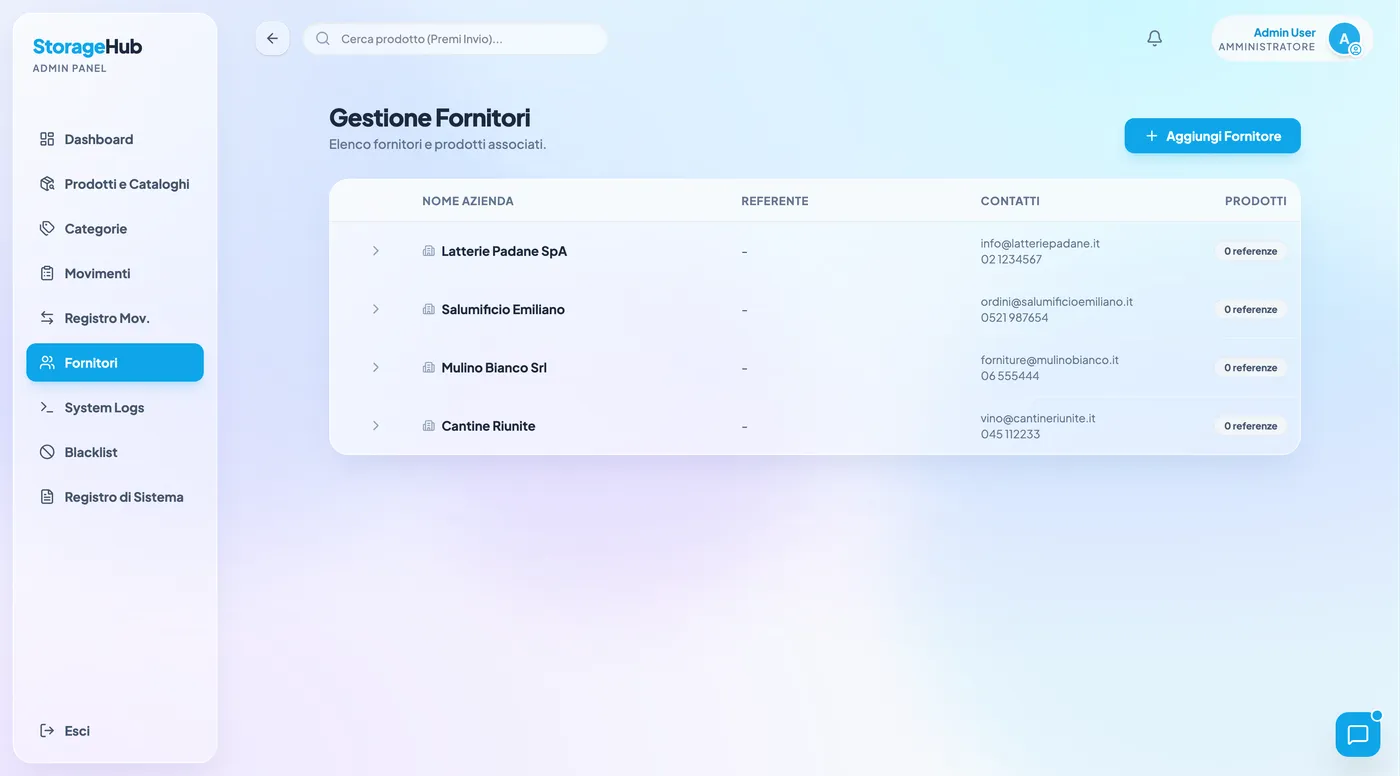
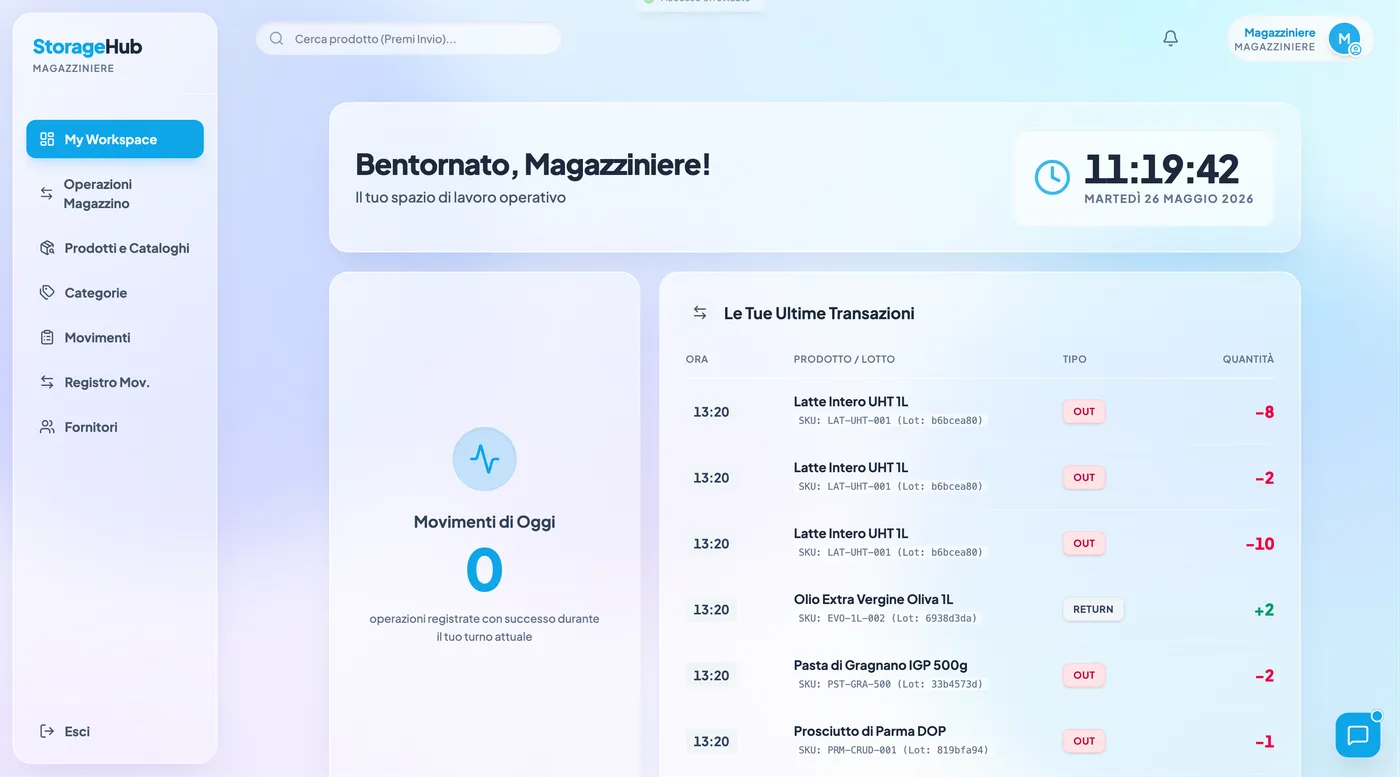
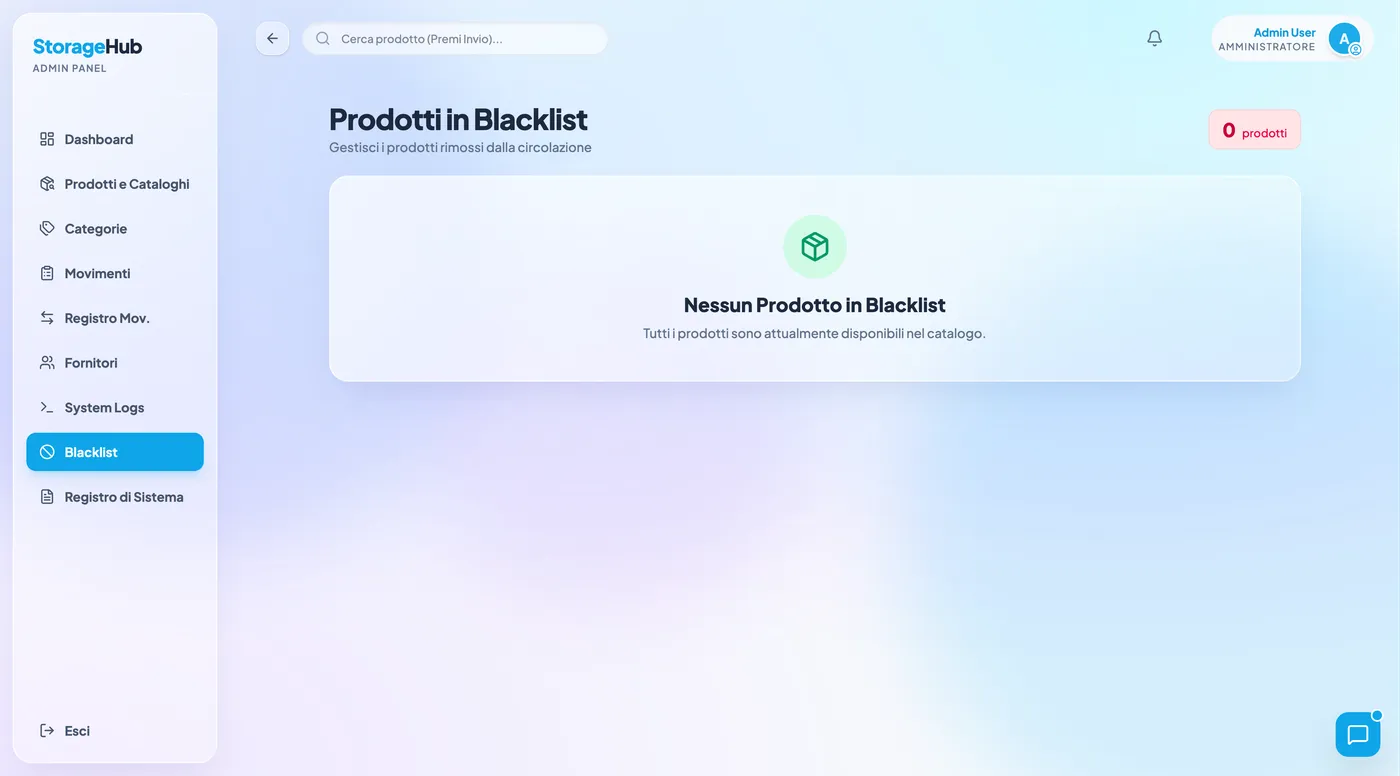
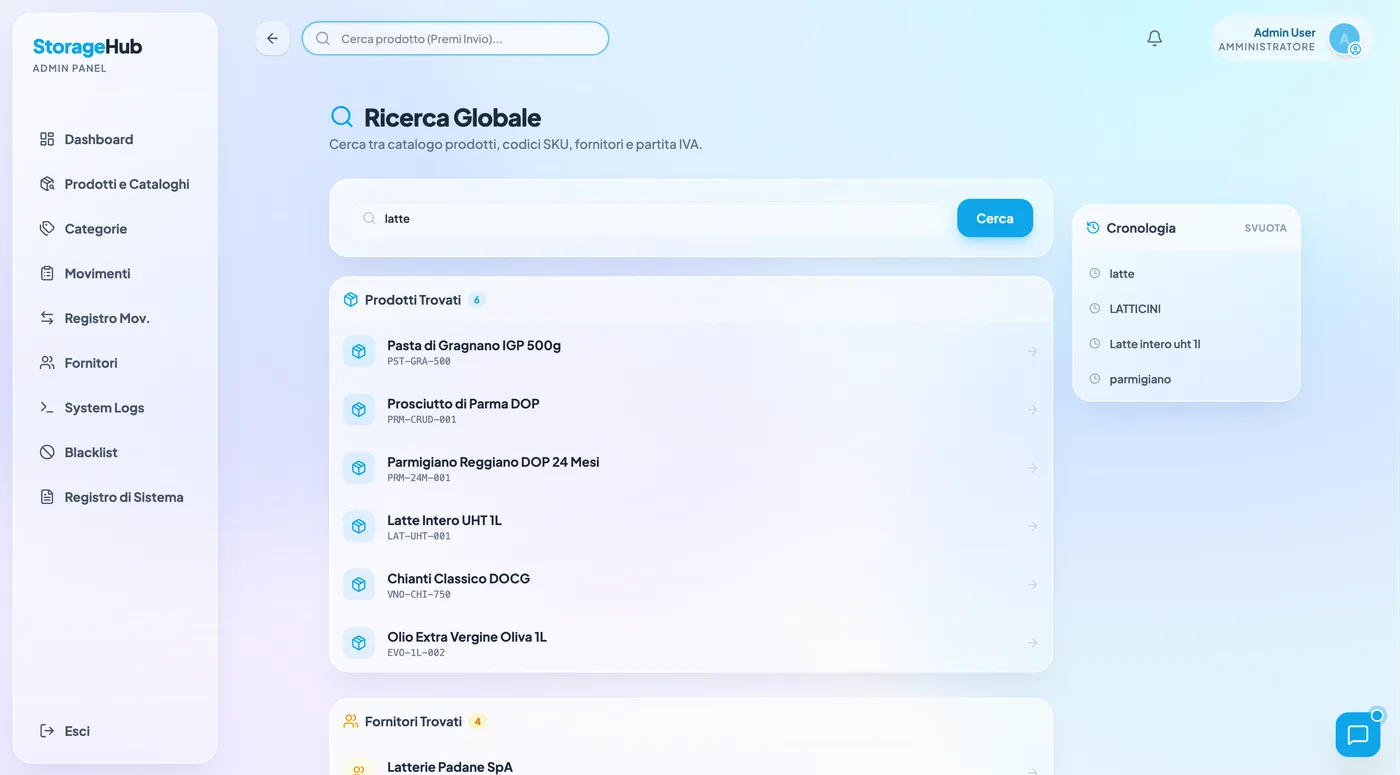
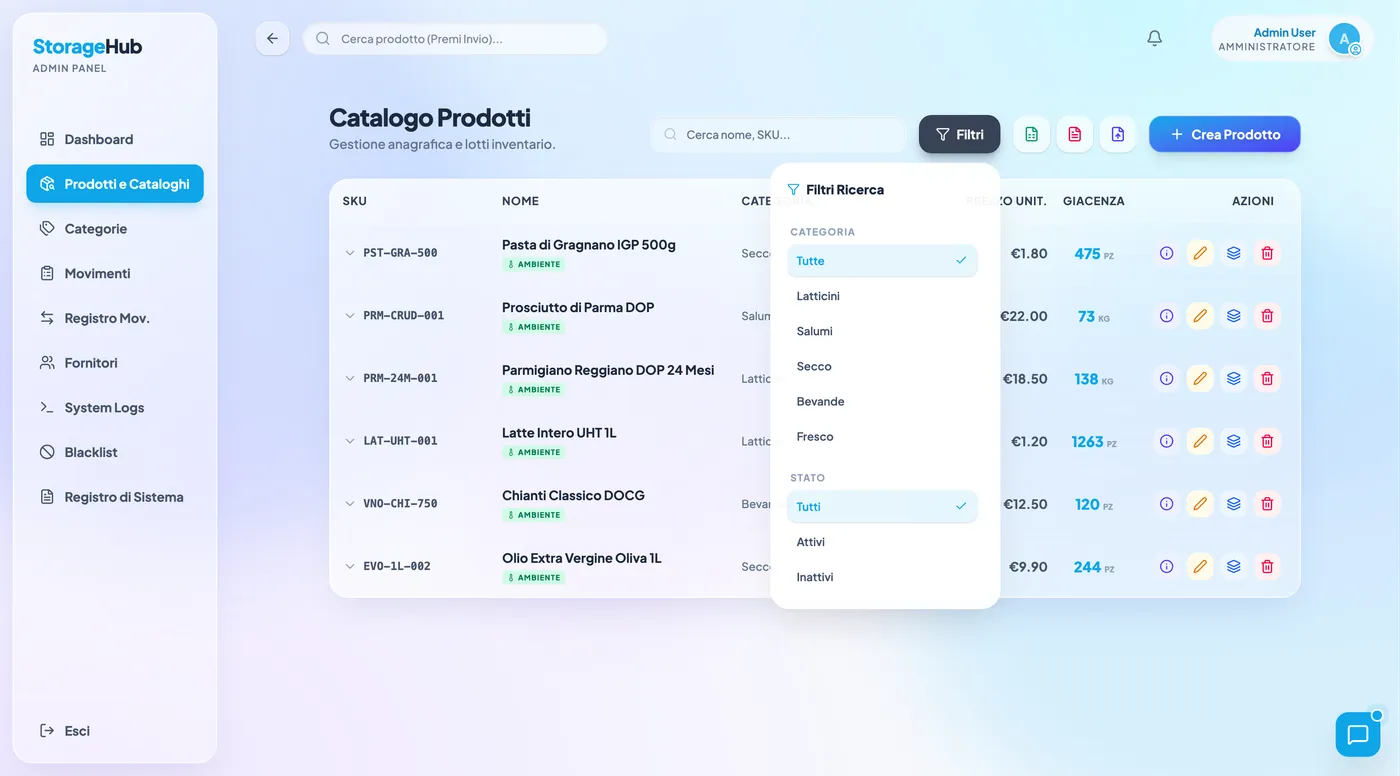
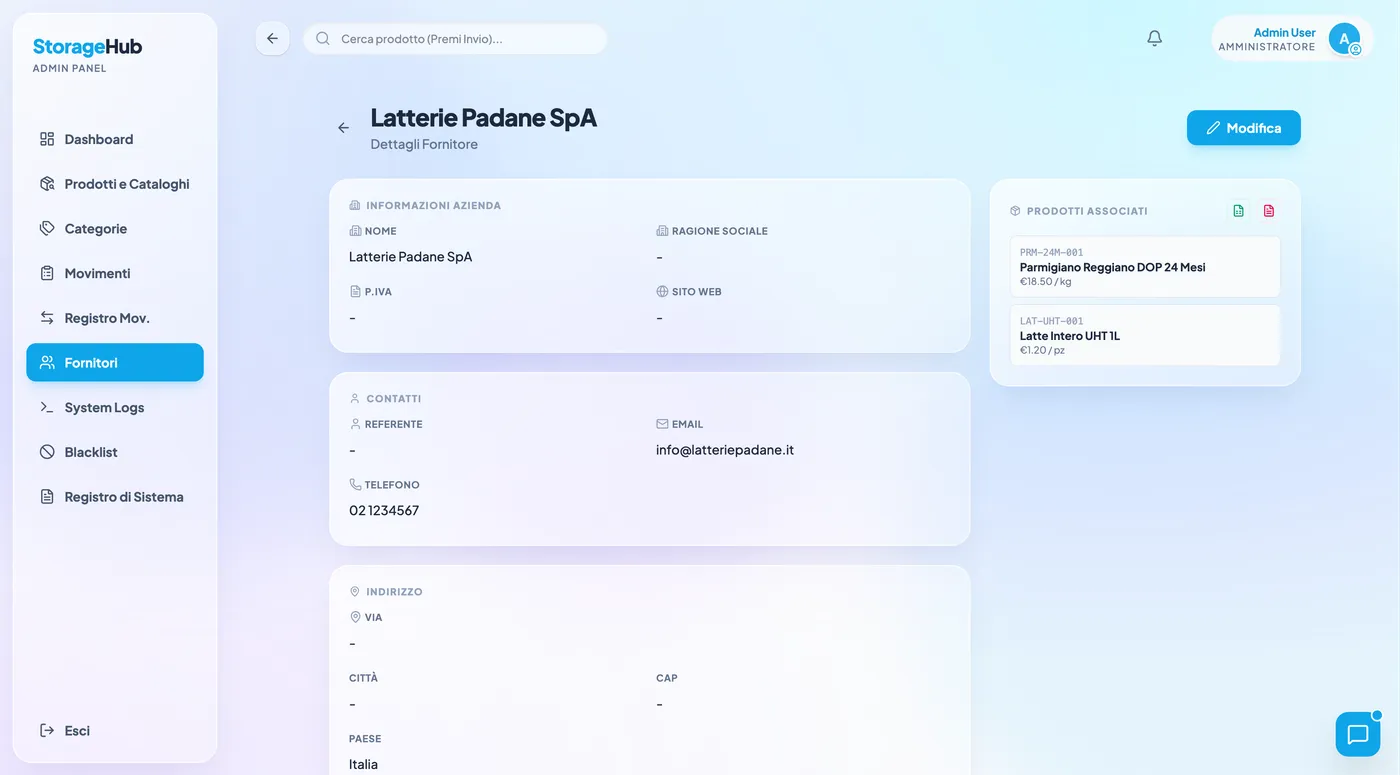
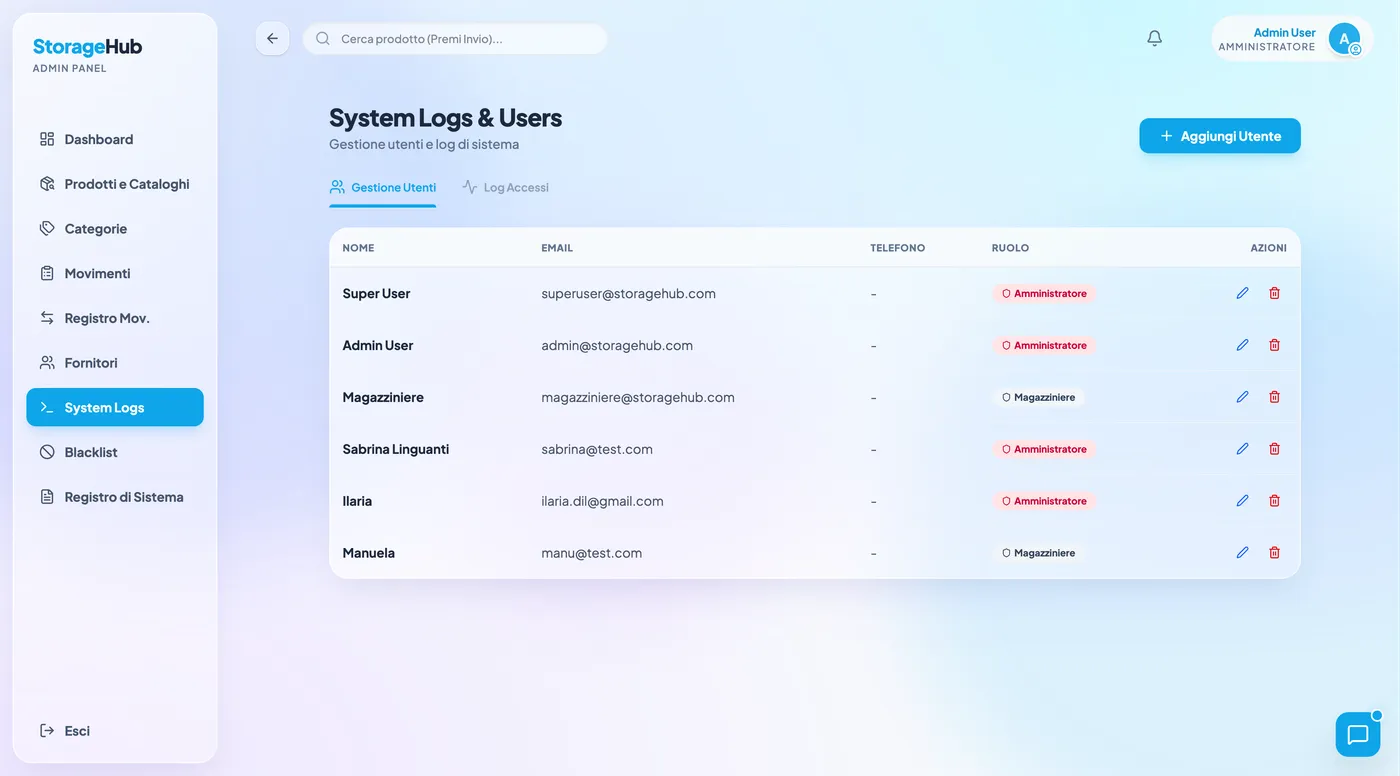
The project was developed within a five-person team at AWS re/Start Academy, with the role of Full-Stack Lead Developer. The starting point was not technology but real workflow analysis: who the users are, what they do, where they lose time. Two radically different profiles emerged — the Admin (strategic view: finances, suppliers, AI reports, threshold configuration) and the Warehouse Operator (focused operations: IN/OUT movements, immediate alerts, zero distractions) — which drove every architecture and interface decision.
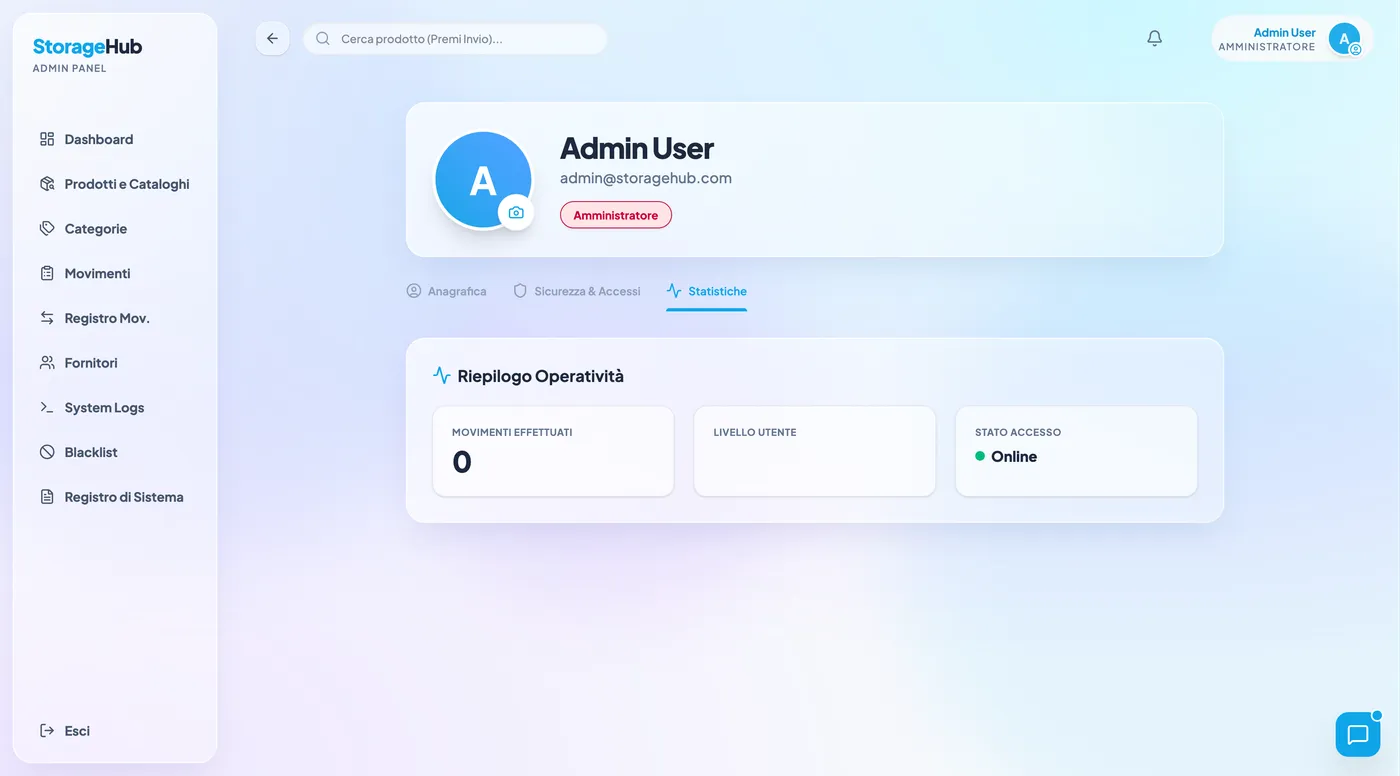
I designed two separate dashboards sharing the same PostgreSQL backend but displaying radically different information. The choice to implement Role-Based Access Control (RBAC) with JWT tokens was not merely technical — it was above all a design decision. A warehouse operator should not see financial margins: it distracts and creates anxiety. A manager should not wade through operational movements: it overloads and slows decisions. The simplicity of each interface is the direct result of that separation. Every field, every button, every notification is there because it serves that specific person — and nothing else.
Django, React & Multi-Provider AI.
The architecture is intentionally decoupled: Django 4 backend with Django REST Framework on PostgreSQL, React 18 frontend with REST-only communication. Every movement recorded in the warehouse instantly updates the management dashboard and recalculates total inventory value. The database maintains an immutable log of every operation — no silent edits, everything tracked, everything reversible. Full audit trail: who did what, when, with which quantity.
The innovative core is the multi-provider AI system: parallel integration of OpenAI GPT-4 and Google Gemini with contextual prompts that analyse stock in real time and suggest reorders in natural language. Supporting two providers instead of one was deliberate: it reduces dependency on a single service, allows recommendations to be compared, and guarantees operational continuity if one provider experiences downtime. The cloud infrastructure runs on AWS with WAF + CloudFront for global distribution, ALB + ECS Fargate for the containerised backend, Multi-AZ RDS PostgreSQL for high availability, ElastiCache Redis for sessions and cache — with an estimated operational cost of approximately €400/month.
Logic and Control.
The result is a management system that does not merely record data, but actively participates in business decisions. By replacing misaligned spreadsheets with a secure, fast, AI-assisted system, StorageHub transforms the warehouse from a cost centre into an efficiency engine. The project proved something that wasn't obvious: technical complexity — full CRUD, multi-role management, integrated AI, immutable logs, production-grade AWS infrastructure — and ease of use are not opposites. They can and must coexist, if design decisions come before technology decisions.